




Schicker Chrysler Dodge Jeep Ram of Washington

Blog / Tire Care & Service

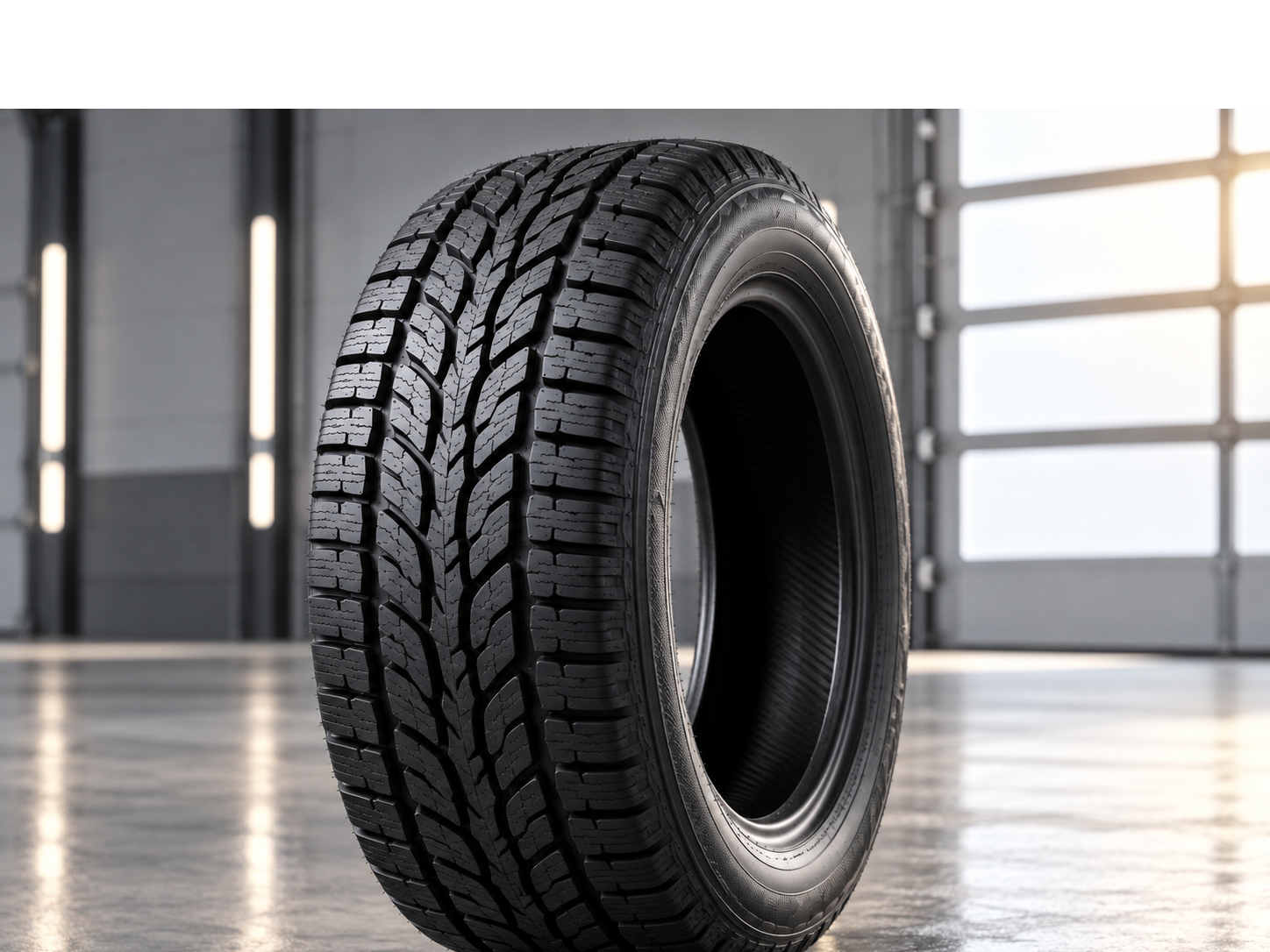
How Long Do Tires Last? When to Replace Them

How often should you change your tires

Your vehicle’s tires are the only point of contact between your Chrysler, Dodge, Jeep, or Ram and the road. Whether you're commuting along I-44, hauling heavy loads in a Ram 1500, or navigating slick winter roads in a Jeep Grand Cherokee, reliable tread is crucial for safety, fuel economy, and handling.

If you've noticed slipping on wet roads or increased road noise, you might be wondering: How often should you change your tires, and how do you know when it’s time for a new set?

At Schicker Chrysler Dodge Jeep Ram, your trusted Missouri CDJR dealership, our factory-certified technicians are here to help you spot tire wear early and maintain peak driving performance.

How Long Do Tires Typically Last?

On average, a standard set of new tires lasts 50,000 to 70,000 miles, or roughly 3 to 5 years depending on driving habits, vehicle type, and road conditions.

However, tires naturally degrade over time-even if you don't log heavy mileage. Most tire manufacturers and safety organizations recommend replacing tires once they reach 6 to 10 years of age, regardless of tread depth.

Factors That Impact Tire Lifespan

  1. Driving Habits: Aggressive braking, quick acceleration, and hard cornering wear tread down significantly faster.

  2. Alignment & Suspension: Misaligned wheels cause uneven outer or inner tread wear, ruining tires prematurely.

  3. Inflation Pressure: Running on underinflated or overinflated tires accelerates tread wear and increases risk of a blowout.

  4. Road Conditions: Potholes, gravel, and extreme Midwest summer heat accelerate rubber degradation.

How Often Should You Change Your Tires? Key Signs You Need New Rubber

Knowing when to replace your tires comes down to a few visual and physical warning signs:

Warning SignWhat It MeansRecommended Action
Tread Below 2/32"Legal limit for safe tread depthReplace immediately
Uneven Tread WearMisalignment or improper inflationSchedule wheel alignment & inspection
Sidewall Cracks / BulgesStructural weakness or internal damageReplace tire immediately to prevent blowout
Vibration at Highway SpeedsOut-of-balance wheel or internal tire shiftGet tires balanced & inspected at a CDJR service center
The Penny Test FailsTread depth is insufficientPlan to replace your set soon

💡 Quick Test: The Penny Trick

Insert a penny upside down into your tire tread with Lincoln's head facing you. If you can see the top of Lincoln's head, your tread depth is below 2/32” and your tires are dangerously worn.

Expert Tire Maintenance Tips to Extend Lifespan

Want to get the absolute most mileage out of your tire investment? Follow these essential maintenance steps:

  1. Rotate Tires Every 5,000 to 7,500 Miles: Regular tire rotations ensure all four tires wear down evenly, especially on front-wheel drive and heavy-duty trucks.

  2. Check Inflation Monthly: Keep tires inflated to the PSI listed on your vehicle's driver-side door jamb sticker (not the maximum pressure stamped on the tire wall).

  3. Align Wheels Annually: Hit a bad pothole? Get your wheel alignment checked promptly to prevent rapid uneven tire wear.

Schedule Tire Service in Washington, MO

Drivers from Union, Sullivan, Saint Clair, St. Louis, Pacific, Marthasville, Bourbon, Hermann, Eureka, and surrounding Missouri communities can visit Schicker Chrysler Dodge Jeep Ram for expert automotive service and tire care.   

Why Choose Our CDJR Service Center?

When it comes to servicing your vehicle, trust the experts who know your Chrysler, Dodge, Jeep, or Ram inside and out:

  • OEM-Approved Tires: Top brand replacements engineered specifically for your vehicle model.

  • Factory-Trained Technicians: Certified experts equipped with state-of-the-art alignment and balancing technology.

  • Service Specials: Rotating discounts on tire rotations, wheel alignments, and new tire sets.

Ready to Upgrade Your Safety?

Don't wait for slick roads to reveal worn-out tires. Schedule your service appointment online today and let our certified team keep you riding smoothly!

Schedule Your Service Appointment at Schicker CDJR

Explore Current Tire & Service Coupons

Shop New Chrysler, Dodge, Jeep & Ram Inventory


Frequently Asked Questions About Tire Care & Replacement

Q: How can I tell how old my tires are?

A: You can check your tire's age by looking at the DOT code stamped on the sidewall. Look for a string of letters and numbers ending in four digits (e.g., DOT ... 3522). The last four numbers indicate the manufacture week and year-3522 means the tire was produced during the 35th week of 2022.   

Q: Should I replace all four tires at the same time?

A: For All-Wheel Drive (AWD) and 4WD vehicles, it is strongly recommended to replace all four tires at once. Uneven tire diameters can place excessive strain on your drivetrain and AWD transfer case. For Front-Wheel Drive (FWD) or Rear-Wheel Drive (RWD) vehicles, you can replace tires in pairs, but the new tires should always be installed on the rear axle for better stability and hydroplaning prevention.

Q: Can I fix a tire with a nail in it, or do I need a new one?

A: If a puncture occurs within the central tread area and is smaller than ¼ inch, it can usually be repaired with a professional patch/plug combo. However, if the puncture is on or near the sidewall or shoulder, the tire cannot be safely repaired and must be replaced.   

Q: What happens if I drive on tires with low tread?

A: Driving on worn tread significantly increases your stopping distance, especially on wet or icy Missouri roads. It drastically raises the risk of hydroplaning, loss of steering control, and sudden tire blowouts at highway speeds.

Q: Does my spare tire expire even if I’ve never used it?

A: Yes! Rubber degrades over time due to age, temperature fluctuations, and exposure to oxygen, regardless of mileage. Spare tires should be inspected regularly and replaced once they reach 6 to 10 years of age.


Posted in:

Recommended Posts

Jeep Grand Cherokee L vs. Grand Cherokee: What’s the Difference?

The Jeep Grand Cherokee line is the gold standard for full-size SUV capability, merging trail-rated 4x4 performance with refined, high-end luxury. However, when shopping for a new jeep for sale, you'll quickly encounter two distinct variations: the standard Jeep Grand Cherokee and the expanded Jeep Grand Cherokee L. While both models feature identical design cues, premium interior materials, and modern safety tech, they are tailored to different lifestyles. Here is a breakdown of the key differences between the Grand Cherokee and the Grand Cherokee L to help you choose the ideal vehicle. 1. Seating Capacity & Layout: 2-Row vs. 3-Row The most defining difference between the two models lies inside the cabin: Jeep Grand Cherokee (2-Row): Seats up to 5 passengers across two spacious rows. It provides generous legroom for front and rear occupants, making it a great fit for daily commuters, active couples, and smaller families. Jeep Grand Cherokee L (3-Row): Seats up to 6 or 7 passengers across three rows. You can configure the second row with an easy-slide 3-passenger bench or captain’s chairs with a pass-through console. The third row expands passenger versatility for larger families, carpool duty, or weekend trips. 2. Overall Size & Cargo Space The "L" in Grand Cherokee L stands for "long," referring to an extended wheelbase and overall body length: Exterior Dimensions: The Grand Cherokee L measures 204.9 inches in overall length with a 121.7-inch wheelbase. The standard Grand Cherokee sits at 193.5 inches long with a 116.7-inch wheelbase. This extra 11.4 inches of length makes the standard model slightly nimbler in tight parking spots, while giving the L a roomier rear profile. Cargo Capacity: Grand Cherokee: Offers 37.7 cubic feet of cargo room behind the second row, expanding to 70.8 cubic feet with rear seats folded flat. Grand Cherokee L: Provides 17.2 cubic feet behind the third row, 46.9 cubic feet behind the second row, and a maximum of 84.6 cubic feet with all rear seats folded flat. 3. Technology & Family-Focused Features Both models come equipped with the intuitive Uconnect® 5 infotainment system with wireless Apple CarPlay® and Android Auto™, available McIntosh® 19-speaker audio, and digital cluster displays. However, the 3-row Grand Cherokee L adds family-oriented cabin tech: FamCAM™ Interior Camera: Available on the Grand Cherokee L, this overhead infrared camera lets front occupants monitor rear-seat passengers directly through the main touchscreen. Multi-Zone Climate Controls: The Grand Cherokee L offers available Quad-Zone Automatic Climate Control, allowing third-row passengers to tailor their temperature settings. 4. Performance, Towing & Powertrains Both SUVs share powerful performance foundations and legendary Jeep 4x4 systems: Standard Engine: Powered by a 3.6-liter Pentastar® V6 producing 293 horsepower, delivering a maximum towing capacity of up to 6,200 lbs when properly equipped. Jeep 4x4 Capability: Available with Quadra-Trac I®, Quadra-Trac II®, and Quadra-Drive® II 4WD systems, paired with Select-Terrain® Traction Management and available Quadra-Lift® Air Suspension. 4xe Plug-In Hybrid Option: If you want an electrified powertrain, the 4xe PHEV system (delivering 375 hp, 475 lb-ft of torque, and up to 25 miles of all-electric range) is exclusive to the 2-row Grand Cherokee model line. Grand Cherokee vs. Grand Cherokee L Comparison Feature / Spec Jeep Grand Cherokee Jeep Grand Cherokee L Seating Capacity 5 Passengers Up to 6 or 7 Passengers Overall Length 193.5 Inches 204.9 Inches Max Cargo Space 70.8 cubic feet 84.6 cubic feet Cargo Behind 2nd Row 37.7 cubic feet 46.9 cubic feet Cargo Behind 3rd Row N/A 17.2 cubic feet Max Towing Capacity 6,200 lbs 6,200 lbs Plug-In Hybrid (4xe) Available Not Available FamCAM™ Camera Not Available Available Which Jeep SUV Belongs in Your Driveway? Choose the Jeep Grand Cherokee if: You want a nimble, luxury-focused SUV for up to 5 passengers, prefer easier garage fit, or want the fuel-saving capability of the 4xe Plug-In Hybrid. Choose the Jeep Grand Cherokee L if: You need three rows of seating, carry extra gear, or want family features like second-row bucket seats and the FamCAM™ system. Find Your Next Jeep at Schicker Chrysler Dodge Ram Jeep Ready to compare the Grand Cherokee and Grand Cherokee L in person? Finding a trusted Jeep dealer makes the purchasing process seamless. Schicker Chrysler Dodge Ram Jeep of Washington, MO, proudly serves Washington and surrounding communities, including Downtown Washington, West End, East End, North Washington, Union, Sullivan, Saint Clair, St. Louis, Pacific, Marthasville, Bourbon, Herman, Eureka, and East Central Missouri. As your premier Missouri CDJR dealership, our finance experts can help you explore competitive Jeep financing offers and limited-time Jeep lease deals. Visit Schicker Chrysler today to browse our inventory and schedule your test drive!

Ram Maintenance Schedule by Mileage: What to Do and When

Whether you use your Ram 1500 to haul heavy trailers across Franklin County, navigate job sites along Highway 50, or simply get the family around town, one thing remains true: regular maintenance is the secret to a long-lasting truck. Ram trucks are built tough, but following a routine maintenance schedule keeps your powertrain running efficiently, protects your resale value, and helps you avoid unexpected breakdown costs down the road. If you are looking for certified Ram service, bringing your truck to a dedicated Service Center at a trusted Ram dealer in Washington, MO, ensures factory-trained technicians inspect and service your vehicle using genuine Mopar® parts. Here is a straightforward breakdown of your Ram truck’s routine maintenance schedule by mileage. 7,500 – 10,000 Miles: The Core Routine Every 7,500 to 10,000 miles (or at least once a year), your Ram requires fundamental maintenance. Drivers who frequently tow heavy loads, drive off-road, or idle for extended periods should consider scheduling these core services closer to every 3,000 to 5,000 miles. Engine Oil & Filter Change: Keeps internal engine components lubricated and clear of buildup. Tire Rotation: Promotes even tread wear across all four tires, extending their overall lifespan and improving traction. Multi-Point Inspection: A thorough check of your brakes, battery health, fluid levels, belts, and wiper blades. 20,000 – 30,000 Miles: System Health Checks As your odometer ticks past 20,000 miles, maintenance shifts toward cabin comfort, engine efficiency, and overall safety systems. Replace Cabin Air Filter: Traps dust, pollen, and local road debris before it enters your truck’s interior. Replace Engine Air Filter (30,000 Miles): Ensures maximum airflow into the engine for optimal fuel economy and horsepower. Brake System Inspection: Detailed inspection of your brake pads, rotors, hoses, and fluid levels for signs of wear. Suspension & Steering Check: Inspection of front suspension components, tie rod ends, and CV boots for cracks or loose hardware. 60,000 Miles: Comprehensive Service Refresh At 60,000 miles, your truck has covered serious ground. This milestone involves deeper fluid replacements and ignition care: Transmission & Transfer Case Fluid Check: Heavy towing or stop-and-go driving breaks down transmission fluid over time. Replacing or flushing fluid ensures smooth gear shifts. Brake Fluid Replacement: Fresh brake fluid maintains solid pedal feel and consistent stopping power. Spark Plug Replacement: Essential for preventing engine misfires, keeping acceleration sharp, and maintaining power output. 100,000+ Miles: Long-Haul Maintenance Hitting six figures on a Ram truck is just the beginning with proper upkeep. Key services at 100,000 miles and beyond include: Engine Coolant Flush: Protects your engine block and radiator from overheating and internal corrosion. Serpentine Belt Replacement: Prevents belt snaps that could leave you without power steering, air conditioning, or alternator power. Front & Rear Differential Fluid Service: Keeps the gears inside your truck's axles operating smoothly without heat buildup. Schedule Your Ram Service Near Washington, MO Today Staying ahead of routine service is the easiest way to enjoy years of dependable performance from your Ram 1500 or Heavy Duty pickup. When it's time for your next oil change, tire rotation, or major mileage service, visit a professional Ram dealership equipped with specialized tools and factory parts. If you are located in or around Franklin County, schedule your next service appointment online today with your local Ram dealer in Washington, MO! Frequently Asked Questions (FAQ) How often should I change the oil in my Ram 1500? Under standard driving conditions, you should change the oil in a modern Ram 1500 every 7,500 to 10,000 miles or once a year, whichever comes first. For vehicles used primarily for severe duty—such as heavy towing or off-road driving—oil change intervals should be shortened to every 3,000 to 5,000 miles. Why should I service my truck at a certified Ram dealership? A certified Ram dealership features factory-trained technicians specialized in Ram trucks, direct access to manufacturer software updates, dedicated diagnostic tools, and original equipment manufacturer (OEM) parts designed specifically for your vehicle. When should I change the spark plugs on a Ram 1500? Depending on your engine model, spark plug replacement intervals typically fall between 60,000 and 100,000 miles. What is included in a multi-point inspection at a Ram Service Center? A standard multi-point inspection covers key safety and performance areas, including brake pad thickness, tire tread depth, battery health, belt and hose condition, suspension components, steering systems, and fluid levels.

The Hurricane is Here: Breaking Down the 550 HP Engine in the 2026 Charger Scat Pack

For decades, the rumble of a heavy V8 defined American muscle. But fields change, engineering evolves, and a new storm has officially made landfall. Dodge has shaken the automotive world by introducing the next generation of muscle—and it is powered by a high-tech inline-six that leaves old limitations in the dust. If you've been looking for a Dodge dealer to see what the future of high performance looks like, look no further than the 2026 Dodge Charger Scat Pack. Say goodbye to the old HEMI and hello to the 3.0-liter Twin-Turbo Hurricane High-Output (H.O.) engine, pushing an astonishing 550 horsepower straight to the asphalt. Twin-Turbo Tech: How It Makes 550 HP Purists might have been skeptical when Dodge announced an inline-six muscle car, but the numbers speak for themselves. The Hurricane H.O. engine isn’t just a replacement for the V8; it’s an upgrade. Two Turbos, Zero Lag: By using two compact, low-inertia turbochargers, each feeding three cylinders, the Hurricane engine delivers instantaneous throttle response. High-Pressure Direct Injection: Running at over 5,000 psi, the fuel system atomizes fuel into a ultra-fine mist, maximizing thermal efficiency and squeezing every ounce of power out of the combustion chamber. Plasma Transfer Wire Arc (PTWA): Instead of heavy cast-iron cylinder liners, the aluminum block utilizes a microscopic, sprayed-on steel coating. This reduces weight and friction, allowing the engine to rev freely and shed heat efficiently. The result? A blistering power band that delivers ferocious acceleration, making it the most capable internal-combustion Charger Scat Pack ever built. Track-Ready Capability Meets Everyday Drivability The 2026 Charger Scat Pack uses its 550 HP to dominate more than just straight lines. Thanks to a sophisticated standard all-wheel-drive system (with a front-axle disconnect feature to allow for classic rear-wheel-drive burnout shenanigans), the Charger hooks up instantly on Missouri backroads or local tracks. Inside, the cabin features a cockpit packed with performance-tracking tech, customizable drive modes, and immersive exhaust notes engineered to deliver that signature mechanical muscle-car soul. 2026 Charger Scat Pack Engine Snapshot Engine Type 3.0L Twin-Turbo Hurricane I6 H.O. Horsepower 550 HP Torque 521 lb-ft Drivetrain Standard Intelligent AWD (with RWD modes) Aspiration Twin-Turbocharged Experience the Storm at Schicker Chrysler Dodge Jeep Ram You don't have to just read about the future of muscle—you can drive it. If you're hunting through dealerships Washington MO has to offer for a true performance specialist team, we have you covered. As your premier Dodge dealer Washington MO destination, Schicker Chrysler Dodge Jeep Ram is ready to help you configure, custom order, or test drive the highly anticipated 2026 Charger lineup. Our knowledgeable team knows muscle cars inside and out, ensuring you get the exact performance specs your garage deserves. Stop searching for a generic Dodge dealer and come see the specialists. Visit Schicker Chrysler Dodge Jeep Ram in Washington, MO today, and feel the power of the Hurricane engine for yourself!